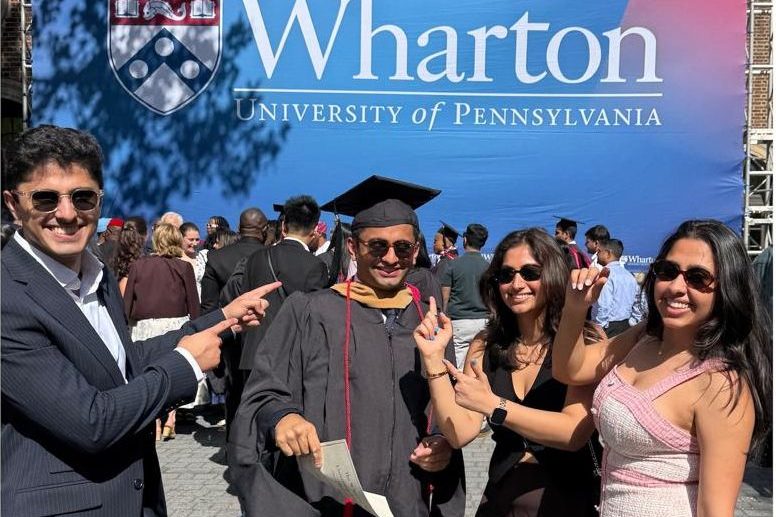
Getting into the Wharton School is an achievement most families would celebrate for a lifetime. The Sahanis did it four times in four years. Navya, Nirav, Dhwanikta and Vatsal hold nine offers between them from the Wharton School, Columbia Business School and MIT Sloan, eight of those won through deferred admission while they were still college seniors with no full-time work behind them. The numbers are remarkable on their own. What sits behind them is the better story. Same last name, same dinner table, four completely different reasons for being there.
That last part is what makes this worth writing about. It would be easy to assume four siblings from one household would blur into a single application, one family “brand” repeated four times with the names swapped out. They did the opposite. One of them is trying to keep people safe online. Another wants to fix what the news has become. The third is untangling how companies report on sustainability, and the fourth is building a way for low-income workers to reach their own wages. Put their essays side by side and you would not guess they were related, until you notice the thing sitting underneath all four.
We worked with all four of them at Admissions Gateway, across four application cycles. Here is what each story was really about, and the thread that turned out to run through the whole family.
Navya, and trust at the level of code
Navya’s motivation is close to home. She has watched how easily the internet can turn on ordinary people — a private image leaked and passed around until someone’s confidence collapses, a lifetime of savings drained by a scam that looked completely legitimate. She saw that kind of damage up close, and it stayed with her.
Most people would have felt bad and moved on. Navya went and taught. She ran workshops on online privacy and digital hygiene for more than fifteen hundred people who owned smartphones but had never been shown how the scams work. Later, when a system failure locked Barnard students out of their own portal right before finals, she was inside the IT department helping build the recovery fix, and the upgrade she pushed for outlasted her. She also served as president of Columbia Alpha Partners, one of the university’s pre-professional societies.
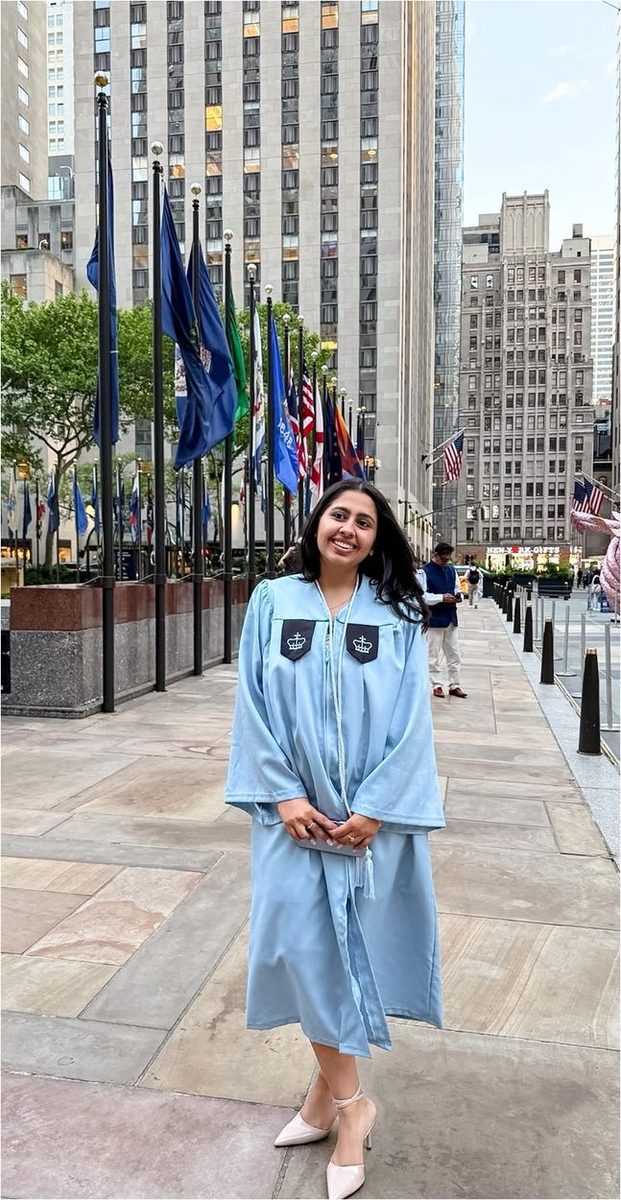
She is the youngest of the four and the one holding the most offers. She studied economics at Barnard College, Columbia University, and in her senior year Wharton, Columbia and MIT Sloan all took her through deferred admission. Until she matriculates she is working as an investment banking analyst at TD Securities in New York. What she wants to build in is cybersecurity, but strip away the vocabulary and it gets simpler. She thinks trust is a utility, something you build into the infrastructure the way a city builds in electricity or clean water, and she wants it built for the people who usually get it last.
Her early drafts explained how the technology works. The version that got in explained why she cannot let it go, which is a much harder thing to write and the reason the essay landed.
What Nirav thinks happened to the news
Nirav’s concern is the weightiest of the four, and it is not abstract. He grew up seeing how fast a false story could tear through group chats in his own community, and how much harm it could do before the truth ever caught up — at its worst the kind of harm that ruins lives rather than just news cycles. A lie moved quickly, and nobody stopped it in time.
He did not respond by writing a think piece. He built things. The habit started at McGill, where he was a producer on Professor Karl Moore’s CEO Series, the long-running radio show and podcast that puts students in a room with chief executives. He was there for conversations most people only read about, and he watched from the inside as platforms rewarded volume over truth almost every time. Columbia took him through deferred admission while he was still at McGill. Wharton he did the long way: three years in capital markets at BMO in Toronto, two more at Kearney advising technology and media businesses on exactly where the industry was cracking, and then a regular-round application five years after he finished his undergraduate degree.
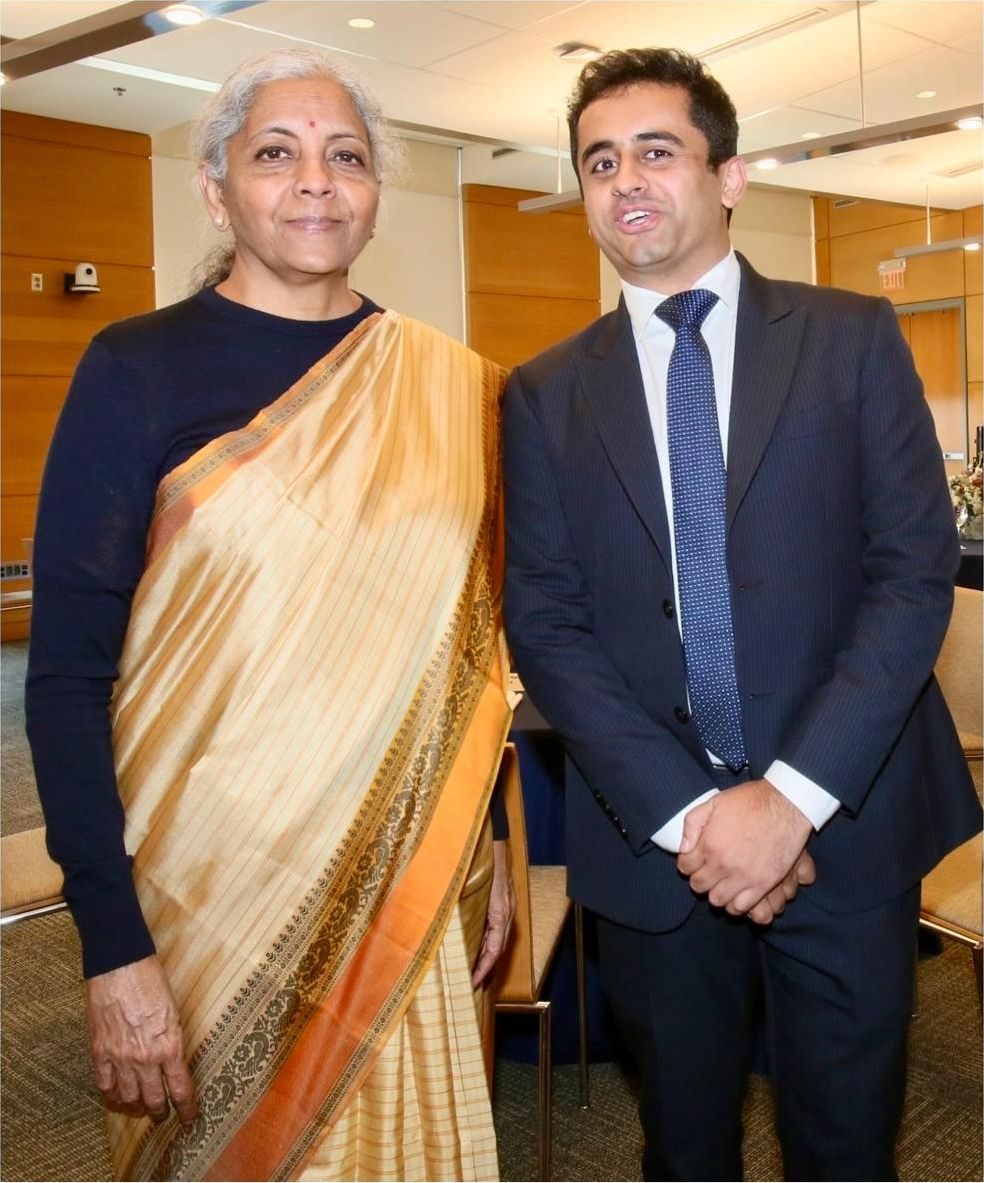
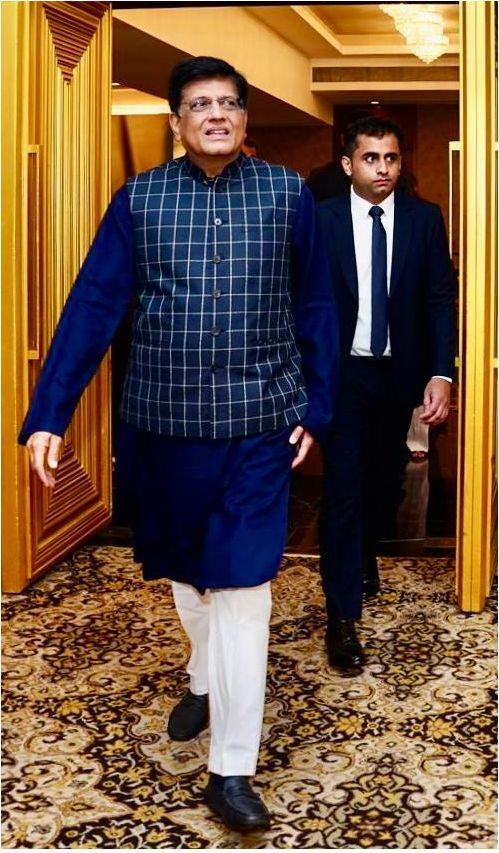
What Nirav cares about is whether people can still tell what is real. In October 2024 he brought India’s Finance Minister, Nirmala Sitharaman, to Wharton during her official visit to the US, for a fireside chat with students that ran more than an hour. Three months later, on 12 January 2025, he co-chaired the 29th Wharton India Economic Forum in Mumbai, where Piyush Goyal, India’s Minister of Commerce and Industry, delivered the keynote on India’s economic vision. He was a Wharton Alumni Fellow in the same stretch, and sat on the PE and VC Club board. He finished the MBA in May 2025 and is an investment banker at Goldman Sachs on Wall Street now. He wanted Wharton for the problem, and the problem has not gotten any smaller.
Dhwanikta and the numbers nobody agrees on
Dhwanikta picked the problem with the least drama attached to it and probably the most money riding on the answer. Everyone talks about ESG. Almost nobody agrees on how to measure it. She had watched that gap from three different seats before she applied: an audit firm; Invest India, the national agency whose job is to bring foreign capital into the country; and a bank in London sitting at the other end of that same pipe. Same frustration every time. Sustainable investing does not stall because people stopped caring. It stalls because the underlying data is inconsistent, hard to compare, and hard to trust.
Where her siblings lead with a person or a moment, Dhwanikta leads with a structural flaw and a plan for it. That is a harder essay to write and a riskier one to submit. Anyone can make a reader feel something with a personal story. Very few applicants can hold an admissions committee’s attention with a measurement problem, and she did it without dressing the problem up as something more emotional than it is.
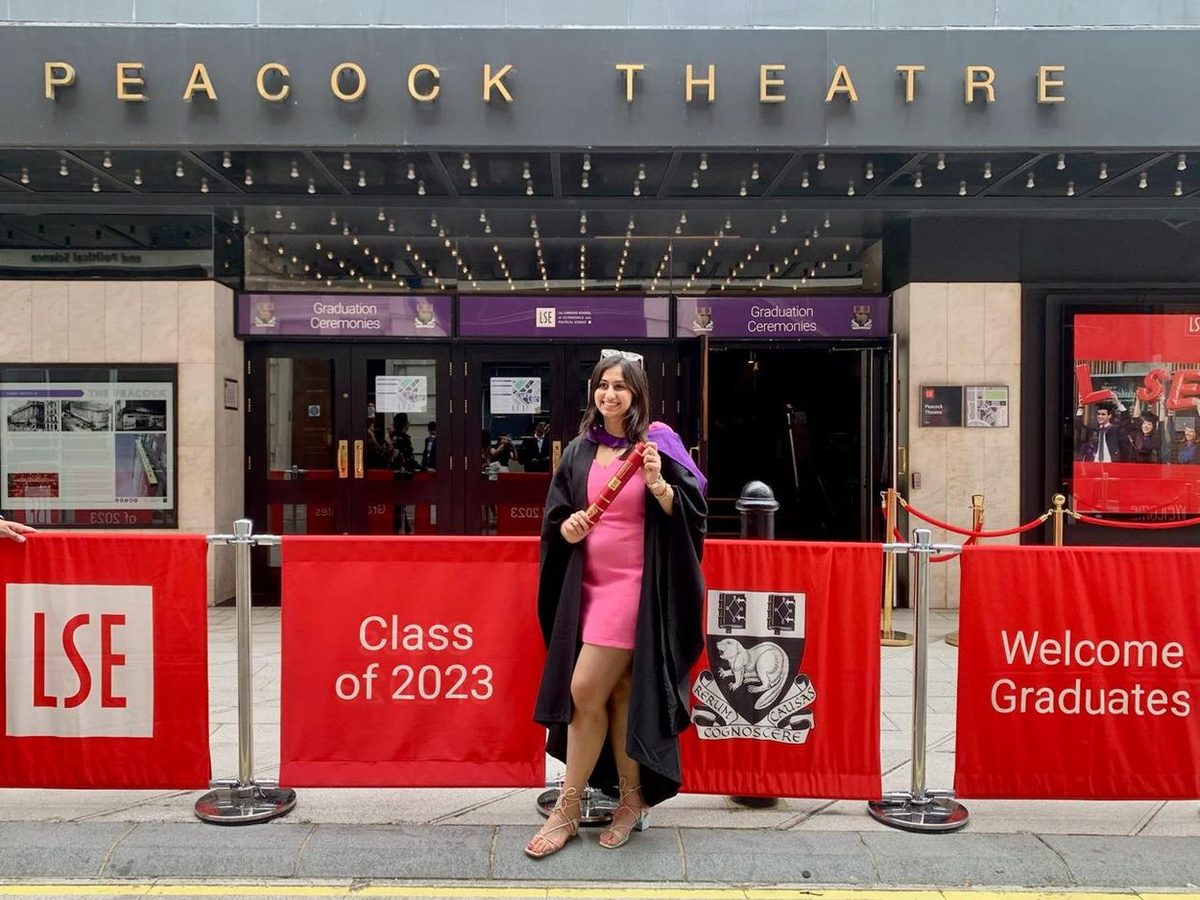
She did her undergraduate degree at the London School of Economics on a full scholarship and stayed in London afterwards. Wharton took her, and so did Columbia. She is a consultant at Deloitte now, working on capital markets transformation, close to the companies that have to answer these questions for real, and she is still the person in the room asking where a number came from. She reads the footnotes. In her field, the footnotes are where the story is.
Vatsal, and dignity in the financial system
Vatsal was already building before he applied, and he had been circling the same problem for years. It started in 2017, in a financial literacy class he was teaching back home, when he realised the lessons were close to useless because his students had no access to a single one of the financial tools he was describing. Later he put a number to what he had felt in that room: hundreds of millions of Indians shut out of banking, credit and investing entirely.
So he built. At Penn he helped a microfinance effort get loans out faster, and he saw up close what a small loan does when it reaches a single mother starting a business or a barber trying to support two aging parents. He had a deceptively simple idea: people should be able to reach the wages they have already earned instead of borrowing against them at punishing rates.
Vatsal talks about cash flow. Listen a little longer and what he is describing is dignity — whether the financial system treats a daily-wage worker as someone worth serving.
That instinct is not new for him. When COVID-19 shut the world down, he spent that spring and summer helping coordinate India’s Vande Bharat Mission as an independent strategic consultant for the state of Gujarat, leading supply-chain and logistical planning as part of the national effort to repatriate stranded citizens.
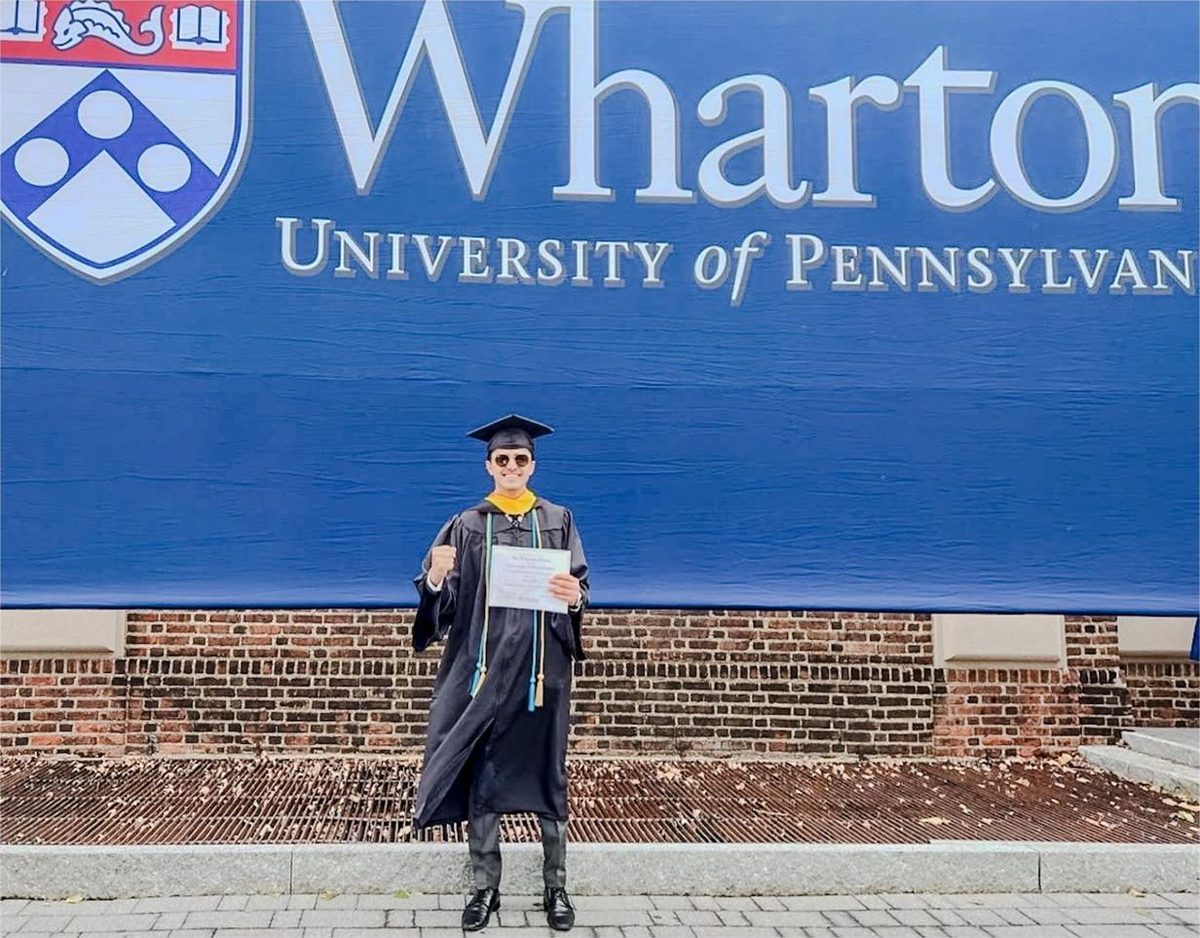
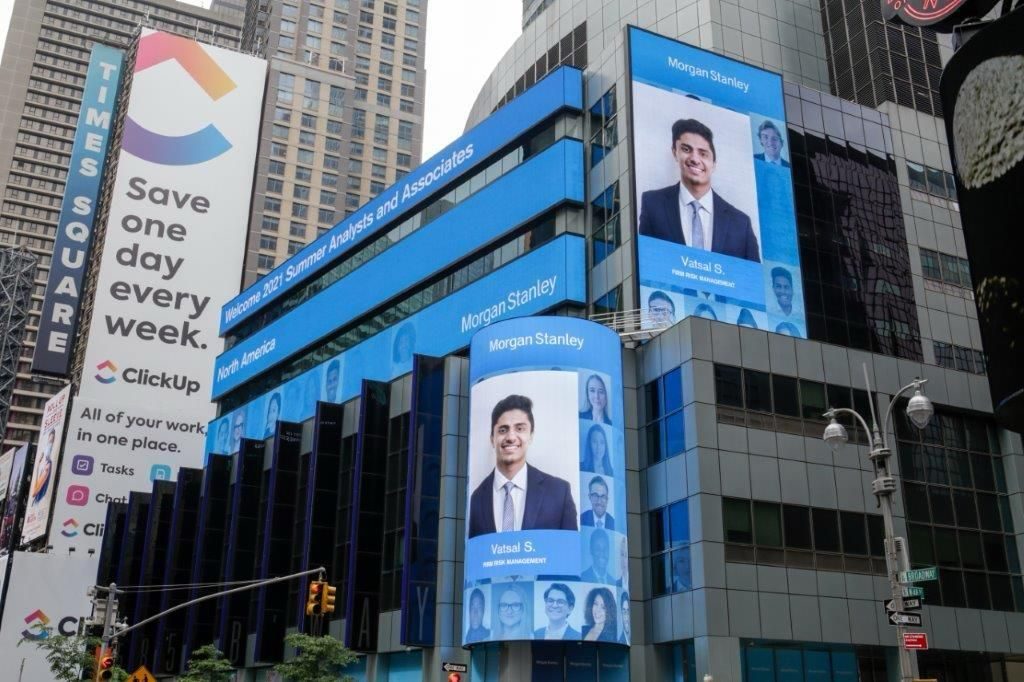
He finished at Penn with a Wharton undergraduate degree in economics and a master’s in data science from the School of Engineering and Applied Science, the two taken together through an accelerated programme that enrolled him in both schools at once. Wharton took him back through deferred admission, and Columbia offered him a place on the same basis; he plans to return for the MBA. Morgan Stanley put him up on the side of its global headquarters in Times Square the summer he interned there, and he is an investment banking associate at the firm now. He is still pointed at the same thing he first saw in that classroom back home.
The family part
It is worth pausing on how closely their records track each other. All four are TEDx speakers. All four have published research in academic journals. And every one of them has co-authored a book that went on to become a bestseller on Amazon India. Nirav’s is Compendium: Management Cases from Emerging Markets. Vatsal’s is Stratégie: Business Intelligence & Analytics. Dhwanikta co-authored Intelligence Reimagined: Strategic Case Studies, Transforming Innovation with IoT, Blockchain, Analytics and AI, and Navya co-authored Treatise: Compendium of Strategic Case Studies. At some point in that house, writing a thing down and putting your name on it became the ordinary response to finding a subject interesting.
Then there is Columbia. Its deferred programme is small on purpose. The most recently published class committed 125 students out of 806 applicants, and everyone in that pool was a college senior competing before they had a single year of full-time work to point to. All four of them cleared it, on top of Wharton.
Today they are spread across finance and consulting on two continents. Dhwanikta is in London and the other three are in the US, and they still turn up for each other’s moments. When Nirav brought India’s Finance Minister to Wharton, his siblings were in the room.
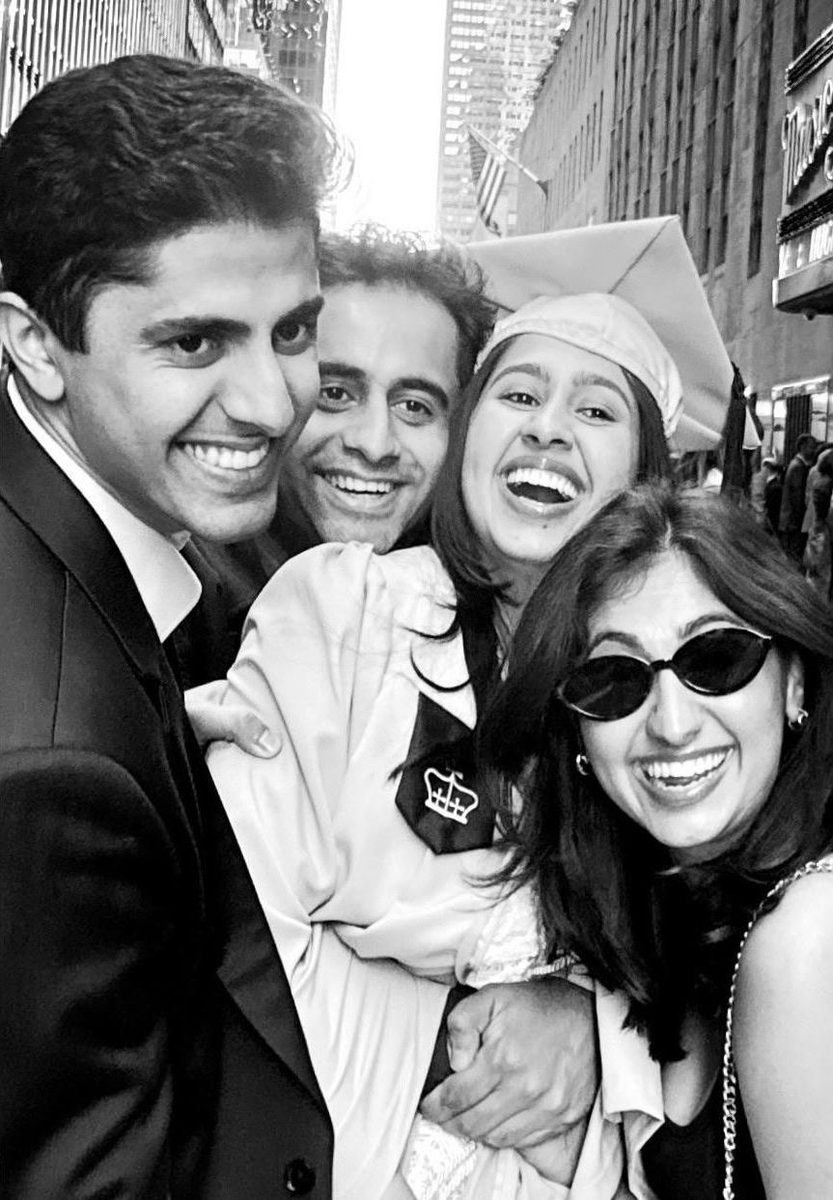
Four whole people who happen to share a last name, a dinner table, and the same stubborn streak.
The thread
Four siblings, four problems. The resumes rhyme more than you would expect, and three of the four landed in finance, which looks like a pattern right up until you read what each of them wrote about. What connects them sits underneath the jobs.
There is no family slogan. Go hunting for one and you will not find it, and forcing one would have made every essay worse. What they share is a reflex. Each of them looked at something structurally broken, whether that was cybersecurity, the news, sustainability reporting or financial access, and refused to file it under “just the way things are.” They could all name the people they were trying to help, with faces and circumstances attached, rather than a market segment. And every one of them had already done something about it before writing a single word for Wharton. They had built, failed, adjusted and led. The ideas were ambitious and also earned.
One more thing, and it is the part that is hardest to coach and the part that mattered most. None of them tried to sound like an “MBA applicant.” Navya did not dress up as a policy expert. Vatsal did not turn financial inclusion into a slogan. They wrote the way they think, and that is why four very different essays all landed.
Our job at Admissions Gateway was to keep the four of them from sounding like one person. Four siblings, four voices, and the discipline to hold each one distinct instead of sanding them into the same polished shape. We work with a lot of applicants who arrive convinced there is a winning template somewhere and their only real task is to find it. That template does not exist. The centre of gravity these four happened to share — a stubborn belief that systems can be built to work better for more people — was strong enough that it never needed to be spelled out. It just showed.
Nine admission offers from three M7 programmes, out of one family, for four reasons that barely overlap. Genetics did not do that. Four people knowing exactly what problem they came to solve did, and every one of them said so in their own words.